Joint Health · Science & Evidence · April 23, 2026 · 8 min read · HS Biopharmaceuticals Editorial
Joint Health Supplements: What 20 Years of Clinical Evidence Actually Shows
A look at what the clinical trials on glucosamine, chondroitin, collagen, MSM, and joint-support botanicals actually found — and what the marketing conveniently leaves out.
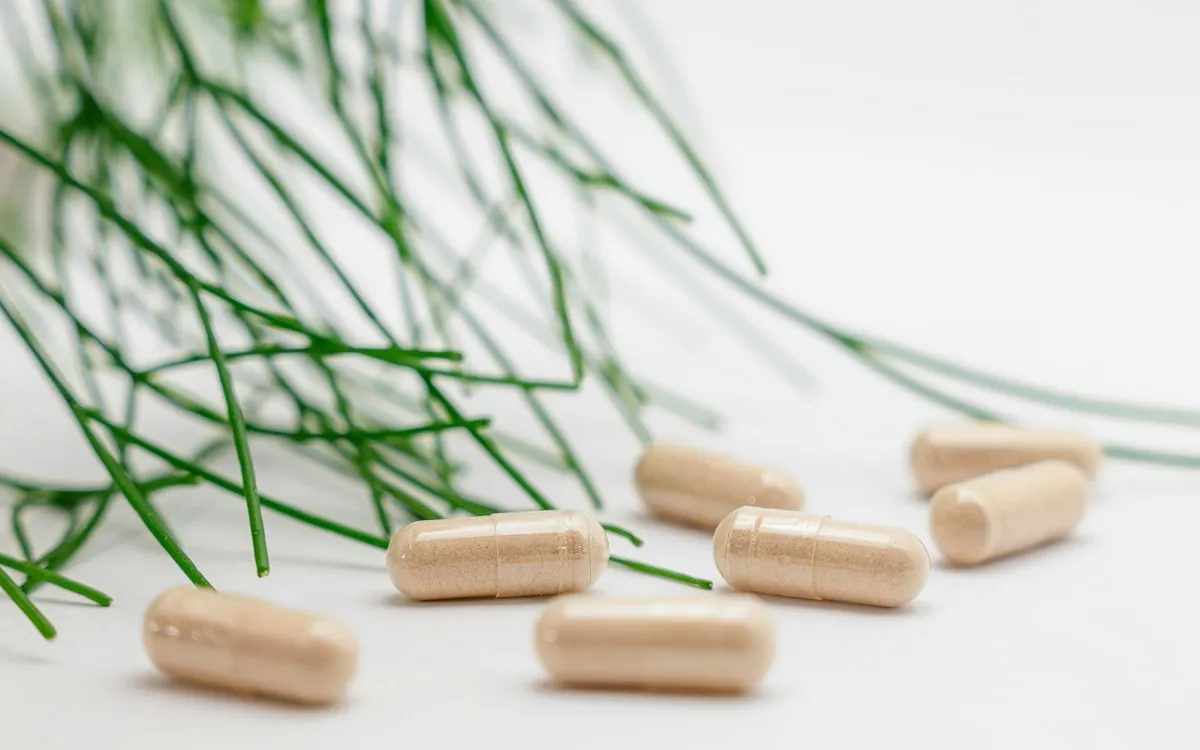
By the time most people walk into an orthopedist’s office complaining about a creaky knee, the cartilage has already been deteriorating for a decade or longer. Osteoarthritis works slowly. Cartilage, once worn, does not regenerate the way muscle or bone does, and the biological systems that should be maintaining it quietly slow down in your thirties.
Roughly 32.5 million US adults live with osteoarthritis, according to the CDC’s National Center for Health Statistics. Eighty-eight percent of them are over 45, but the damage that caused their symptoms started much earlier. Direct medical costs total about $65 billion a year in the United States alone. Indirect costs — lost work, reduced mobility, cascading health consequences — add another $17 billion.
The supplement aisle knows this. Every pharmacy shelf carries glucosamine, chondroitin, collagen, MSM, turmeric, boswellia, and a rotating cast of branded ingredients, each promising joint relief. Most of those products make similar claims. Almost none of them tell you what the clinical trials actually found.
So here is what the trials actually found.
The Glucosamine and Chondroitin Story Is More Complicated Than Either Side Admits
The defining piece of research on glucosamine and chondroitin is the 2006 GAIT trial (Glucosamine/chondroitin Arthritis Intervention Trial), funded by the NIH. It enrolled 1,583 patients with knee osteoarthritis, randomized them to glucosamine (1,500 mg/day), chondroitin sulfate (1,200 mg/day), the combination, celecoxib (as a positive control), or placebo, and followed them for 24 weeks.
The headline result was unkind to the supplement industry: neither glucosamine nor chondroitin, alone or combined, outperformed placebo for mild knee pain. Celecoxib did. That finding has been cited ever since as evidence that glucosamine and chondroitin don’t work.
Here is what the headlines left out. The GAIT investigators ran a pre-specified analysis on the subgroup of patients with moderate-to-severe pain at baseline — 354 patients. In that subgroup, glucosamine plus chondroitin produced a 20% or greater pain reduction in 79% of patients, versus 54% for placebo. That is a clinically meaningful difference in the patients who actually have the most reason to try the supplement.
The later years have produced more evidence in both directions. A 2024 network meta-analysis found that glucosamine combined with omega-3 fatty acids, or with ibuprofen, significantly reduced pain versus placebo. The triple combination of glucosamine + chondroitin + MSM has shown effectiveness in pain reduction across several studies. A 2025 systematic review that screened over 2,000 papers and included 146 studies reported that over 90% of efficacy studies documented positive outcomes.
The honest read of the evidence: glucosamine and chondroitin produce a small-to-moderate effect that looks most useful in patients with established, painful osteoarthritis rather than people who are still asymptomatic. They are not cartilage regenerators. They are not going to undo 20 years of wear. They are decent, cheap, safe ingredients that meaningfully help some people and not others.
Which form matters. Glucosamine sulfate has the strongest clinical backing, particularly in European markets where it is regulated as a drug. Glucosamine HCl is the more concentrated form and is preferred when minimizing pill size. Chondroitin sulfate sodium is the form found in virtually every clinical trial, and the one covered by United States Pharmacopoeia monographs — a distinction that matters when a formulator or patient is looking for pharmaceutical-grade material.
The most cited study on glucosamine and chondroitin technically found them no better than placebo. It also found something else, which the headlines left out.
Collagen Exists as Two Ingredients, With Two Different Mechanisms
“Collagen” is a confusing word in supplement marketing because it refers to two genuinely different categories of ingredient that work through different biological pathways.
Hydrolyzed collagen peptides are the version you see in beauty-from-within drinks. They are collagen protein broken into short peptide chains — typically 2–5 kilodaltons — and dosed at 5–10 grams per day. An updated 2024 meta-analysis of 35 randomized controlled trials, pooling 3,165 patients, found that collagen derivatives produced small-to-moderate improvements in joint pain and function compared with placebo, with a safety profile comparable to placebo. A separate 2023 meta-analysis of four trials in 507 knee osteoarthritis patients reached similar conclusions.
The mechanism is substrate supply. Collagen peptides deliver the amino acids glycine, proline, and hydroxyproline, which the body reassembles into its own collagen. Hydroxyproline, specifically, is a marker amino acid for collagen structure, and hydrolyzed collagen delivers it in a concentration plant proteins typically cannot match.
Undenatured type II collagen, usually called UC-II or native type II collagen, is a completely different ingredient. It is not hydrolyzed. The triple-helix structure of the collagen is preserved, and the ingredient works through oral tolerance at the gut’s Peyer’s patches — a mechanism more similar to how some immunotherapies work than to how protein supplementation works. The clinically relevant dose is 40 milligrams per day, not grams.
A 2016 multicenter randomized controlled trial in 191 osteoarthritis patients compared 40 mg of UC-II against a standard 1,500 mg glucosamine + 1,200 mg chondroitin regimen and placebo, over 180 days. UC-II produced greater improvement in WOMAC pain, stiffness, and function scores than both the combination and placebo. A 2024 meta-analysis in the Journal of Translational Research reviewed the published evidence on UC-II and concluded it is safe and effective at 40 mg daily for reducing pain and improving joint function.
The practical point: if a supplement label says “collagen,” a serious consumer or formulator should ask which kind. They are not interchangeable.
MSM: The Evidence Is Weaker Than the Marketing
Methylsulfonylmethane — MSM — is an organic sulfur compound marketed as a source of bioavailable sulfur for connective tissue synthesis. The clinical evidence is genuinely mixed.
A 2011 randomized controlled trial dosing MSM at 3.375 grams per day for 12 weeks in 49 patients with knee osteoarthritis found a statistically significant improvement in WOMAC pain and function compared with placebo. The authors noted, however, that the effect size was small, and that clinical significance was uncertain.
A 2011 meta-analysis of MSM and DMSO trials for knee osteoarthritis concluded that the existing evidence was not adequate to recommend MSM as specifically effective for reducing osteoarthritis knee pain. More recent work — a 2023 trial on participants with mild knee pain — found statistically significant improvement in knee quality-of-life scores at 12 weeks with 2,000 mg of MSM per day, but again the effect size was modest.
MSM is cheap, widely available, and safe. It may produce small benefits for some people. The evidence does not support marketing it as a foundational joint health ingredient.
Boswellia and Curcumin: Real Pharmacology, Modest Evidence
Two botanicals with genuine biochemical mechanisms — not just “anti-inflammatory” handwaving — are boswellia serrata and curcumin.
Boswellic acids inhibit the 5-lipoxygenase (5-LOX) enzyme, which is the primary source of leukotrienes in inflammatory signaling. Curcuminoids inhibit cyclooxygenase-2 (COX-2), the same enzyme class that NSAIDs target. A 2018 systematic review and meta-analysis concluded that both curcuminoid and boswellia formulations were statistically more effective than placebo for pain relief and functional improvement in knee osteoarthritis.
The caveat is study quality. Most of the trials in that meta-analysis enrolled fewer than 100 patients, and the overall evidence base is characterized as low quality by strict methodological standards. A 2017 comparative trial found curcumin’s efficacy roughly comparable to NSAIDs for pain relief, with meaningfully fewer gastrointestinal adverse events — which is worth noting for anyone who cannot tolerate long-term NSAID use.
A 2020 systematic review of boswellia specifically concluded that standardized extracts show consistent benefit for pain and function, but called for larger, longer trials.
The honest summary: botanicals with real pharmacology, real but modestly-sized clinical effect, a safety profile significantly better than NSAIDs, and study sizes that are still too small to be definitive.
What None of This Does Alone
The intervention with the strongest evidence for joint health is not on any supplement shelf. It is losing weight (for overweight patients), resistance training to maintain the muscle that supports the joint, and maintaining daily movement volume. Those three, in combination, produce effect sizes that supplement literature cannot touch.
A 2013 trial published in JAMA showed that diet plus exercise in overweight adults with knee osteoarthritis produced greater pain reduction and functional improvement over 18 months than either intervention alone, and substantially more than either commonly-used supplement regimens in head-to-head comparisons.
This is not a fashionable point to make in a piece about supplements. It happens to be the strongest conclusion in the evidence.
So What Should You Actually Do
The practical logic, in order of evidence weight:
If you are carrying extra weight, lose some of it. Every pound lost removes approximately four pounds of load from the knee during walking. This is the single largest lever available for knee osteoarthritis prevention and management.
Build and maintain the muscle around the joint — quadriceps, hamstrings, hip stabilizers, rotator cuff if the concern is shoulders. Muscle is the primary load-bearing structure keeping the joint aligned and cushioned. Weekly resistance training, even at modest intensity, materially changes osteoarthritis outcomes over years.
If you want to add a supplement, match the ingredient to the problem. For established osteoarthritis with moderate-to-severe pain, the clinical evidence for glucosamine plus chondroitin is stronger than is often acknowledged, and UC-II at 40 mg daily has a distinctive mechanism worth considering. For active adults with occasional joint stress, hydrolyzed collagen has reasonable evidence at 5–10 g daily. For anti-inflammatory support, standardized boswellia or curcumin extracts have mechanistic credibility and modest clinical support, with fewer side effects than chronic NSAIDs.
Ingredient quality matters. The clinical trials that produced these findings used pharmacopoeia-grade or clinically-standardized materials, not whatever commodity ingredient was cheapest that month. Chondroitin sulfate sodium compliant with United States Pharmacopoeia monographs contains specifications for residual sulfate and chloride that lower-grade material often fails; those specifications exist because they affect bioavailability and purity. If you are evaluating a finished product, the supplier’s quality documentation matters as much as the label.
The Broader Point
Joint health is a 30-year game of slow biology, and the evidence on supplements reflects that. The ingredients with real evidence produce real but modest effects. The ingredients with weak evidence are often marketed identically to the ones with strong evidence, and the casual consumer has no way to tell the difference without reading the trials. The most important interventions — weight, strength, movement — are free, unbranded, and underemphasized.
The future of this category is not a bigger megadose of the same commodity ingredients. It is more specific mechanisms (UC-II-style oral tolerance, plant-based alternatives for vegan consumers, low-molecular-weight fractions with improved bioavailability) and more honest labeling about what the evidence actually supports.
References and Further Reading
- The NIH Glucosamine/Chondroitin Arthritis Intervention Trial (GAIT) — New England Journal of Medicine, 2006
- Comparative Efficacy of Glucosamine-Based Combination Therapies in Alleviating Knee Osteoarthritis Pain: A Systematic Review and Network Meta-Analysis — 2024
- The Safety and Efficacy of Glucosamine and/or Chondroitin in Humans: A Systematic Review — 2025
- Efficacy and tolerability of an undenatured type II collagen supplement in modulating knee osteoarthritis symptoms: a multicenter randomized, double-blind, placebo-controlled study — 2016
- Undenatured type II collagen for knee osteoarthritis — 2024 meta-analysis
- Effect of collagen supplementation on knee osteoarthritis: an updated systematic review and meta-analysis of randomised controlled trials — 2024
- Analgesic efficacy of collagen peptide in knee osteoarthritis: a meta-analysis of randomized controlled trials — 2023
- Efficacy of methylsulfonylmethane supplementation on osteoarthritis of the knee: a randomized controlled study — 2011
- Efficacy of Curcumin and Boswellia for Knee Osteoarthritis: Systematic Review and Meta-Analysis — 2018
- Effectiveness of Boswellia and Boswellia extract for osteoarthritis patients: a systematic review and meta-analysis — 2020
- Arthritis in Adults Age 18 and Older: United States, 2022 — CDC NCHS Data Brief No. 497
Formulating a joint-health product? Talk to our US technical team.
HS Biopharmaceuticals supplies the clinically-validated raw materials referenced in this article — including pharmacopoeia-grade chondroitin sulfate, glucosamine salts, hydrolyzed collagen, and our branded Native CT-II undenatured collagen. Our team responds within one business day.
Request a SampleRelated Reading
Coming soon
Article placeholder 1
Additional articles on joint health science and evidence will appear here.
Coming soon
Article placeholder 2
Additional articles on joint health science and evidence will appear here.
Coming soon
Article placeholder 3
Additional articles on joint health science and evidence will appear here.